(0) Your cart
Your shopping cart is empty
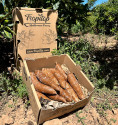
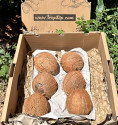



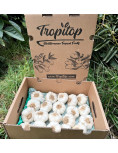
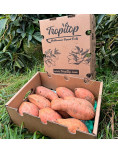


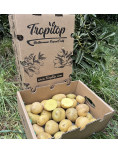





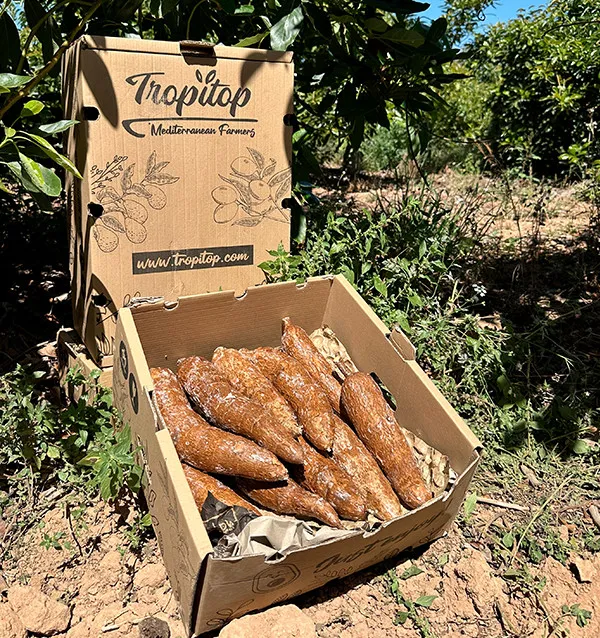


Cassava is a tropical root especially appreciated for its firm texture, mild flavour and great versatility in the kitchen. Once cooked, its flesh becomes tender and pleasant, making it perfect for traditional dishes, side dishes and both simple and more elaborate recipes.
At Tropitop, we select cassava from Costa Rica, a country with climatic conditions that are particularly favourable for growing tropical roots. Each piece is carefully chosen so that it arrives at your home fresh, firm and in good condition for preparation.
A nutritious and highly versatile tropical root, ideal for boiling, frying, baking, preparing purées, soups and stews, or serving as an accompaniment to a wide variety of dishes.
🟤 Product: Cassava
Cassava is a tropical root especially appreciated for its mild flavour, firm texture and great versatility in the kitchen. Once cooked, its flesh becomes tender and pleasant, making it perfect for side dishes, soups, stews and numerous traditional recipes.
The main qualities of cassava include:
Our cassava comes from Costa Rica, a country with a tropical climate and conditions that are particularly favourable for growing roots and tubers.
The warm temperatures, humidity and soil characteristics encourage the development of firm, fleshy roots suitable for use in a wide variety of culinary preparations.
At Tropitop, we select each batch according to its freshness, firmness and quality, so that the cassava arrives at your home in good condition and ready to be used in your favourite recipes.
Cassava stands out for its ability to adapt to numerous cooking methods. It can be served as a side dish, used as a base for purées and doughs, or added to soups, stews and traditional dishes.
Before cooking, the outer skin and the layer beneath it must be removed completely. The cassava should then be cut into pieces and cooked until the flesh is fully tender. Any hard central fibre should also be removed when visible.
Thanks to its mild flavour, cassava absorbs seasonings very well and pairs with garlic, aromatic herbs, citrus fruit, spices, sauces and all kinds of meat, fish and vegetables.
If you are looking to buy cassava online, at Tropitop you will find cassava from Costa Rica, selected for its freshness, firmness and quality.
Cassava is a traditional food used in many cuisines around the world. Its texture and mild flavour make it a useful alternative to other side dishes and allow it to be used in both simple and more elaborate recipes.
It can be cooked in many ways: boiled, fried, baked, mashed, added to soups or incorporated into doughs and traditional preparations. In every case, it must be peeled and cooked thoroughly before consumption.
Cassava can be used in a wide variety of recipes and preparations. Here are some ideas:
If you are looking for somewhere to buy fresh cassava, our online shop allows you to receive cassava from Costa Rica at home, carefully selected and ready to cook in your favourite recipes.
Peso envío: 4 kg